Kitchen Exhaust Compliance for Multi-Site QSR Groups
A condensed edition of the SAIS Hygiene Kitchen Exhaust Compliance Guide, written for facilities, operations and property leaders running national quick-service restaurant networks.

At a Glance
If you run dozens or hundreds of kitchens, exhaust cleaning is more than a cleaning problem. At scale, it is an evidence problem. Across every store, someone at head office needs to know what has been done, what is due, and what is overdue, and be able to produce the records your annual fire safety statement relies on, and that an insurer may ask for at any site, today.
This is a condensed edition of our full Kitchen Exhaust Compliance Guide, written for multi-site QSR groups and for franchisors and franchisees who carry these obligations across a brand. It leads with the buying tool, the provider checklist, then sets out where scale changes the job, the QSR reality, the compliance facts underneath it, what a proper clean covers, and where multi-site groups most often get caught out.
Short on time? Skip straight to the provider evaluation checklist. It will tell you in five minutes whether your current arrangement covers what it should, or whether there are gaps worth closing.
In This Guide
How to Evaluate a Provider (The Part Most Networks Get Wrong)
Most facilities and operations teams inherit an exhaust cleaning arrangement that was set up years ago, often chosen on price, running on autopilot until a failed inspection, a near-miss, or a question from an insurer forces a look under the bonnet. Here is how to assess whether your current arrangement, or a prospective one, holds up across a network. It is designed to be used with any provider, including SAIS Hygiene.
System Coverage
Competence
Documentation
Reliability
Workforce and multi-site capability
0 / 15
Tick the boxes above to score your current arrangement.
How to read your result
- Ticked every box. You have a thorough provider. A good one is hard to find, so hold onto them and do not switch for the sake of it.
- Ticked most, not all. Good work with gaps, usually documentation, frequency alignment or after-hours capability. Raise it directly. A good provider welcomes the feedback.
- Left several unchecked. Very common, and worth acting on before a failed inspection, near-miss or insurer question forces the issue.
Five questions to ask any provider
- Does the service include the full system: hood, duct and fan?
- How is cleanliness verified?
- Are before-and-after photos provided?
- What standard is the system cleaned to?
- Are there any exclusions in the scope of work?
If the answers are vague on the ductwork, the photos, or the standard, that is your signal to look closer.
One test you can run today. Ask your current provider for an after-photo of the inside of a vertical duct at any one site. The duct interior is the part that fails an inspection, and the part you cannot see from the floor. If they cannot produce one, it is worth asking what your reports are actually proving.
Not sure your current reports stack up?
Send us your last service report for any one site. We will tell you, free and without obligation, what it does and does not prove against the checklist above: whether it covers the duct and fan, cites AS 1851-2012, and includes real before-and-after evidence. No switch required.
Why Scale Changes the Job
Run one kitchen and the task is simple: find a competent local provider, set a schedule, monitor results. We will say this plainly, because it is true: if you run a single site in one city, you probably do not need a national provider, and a good local provider who meets the checklist above will serve you well. We would rather tell you that than oversell.
Scale changes three things:
- Compounding risk. Every additional site multiplies exposure. One neglected system is a problem at one location. The same corner cut across twenty stores is a systemic gap, with proportionally larger implications when an inspector, insurer or auditor starts asking questions.
- The consistency problem. Ensuring the standard at a regional Queensland drive-thru matches the standard at a flagship Sydney CBD store. When you are not physically present at every clean, consistency is what holds the program together.
- The multiple-provider trap. Many multi-site groups end up with different providers in different regions: inconsistent documentation formats, varying cleaning standards, and multiplied admin. When something goes wrong, you are piecing together who was responsible and whether the paperwork stacks up.
A properly managed national program looks different: one provider with the coverage and systems to manage the entire portfolio, centralised scheduling set per site against actual cooking operations, consistent standards regardless of geography, a single point of contact, consolidated reporting, and transparent volume-based pricing.
The QSR Reality: High Grease, Head-Office Visibility, Shared Buildings
QSR kitchens are at the heavy end. Fryers, flame-grills and charcoal cooking produce high grease output, so build-up in ductwork and fans happens faster than in a standard restaurant. That has direct scheduling and frequency consequences.
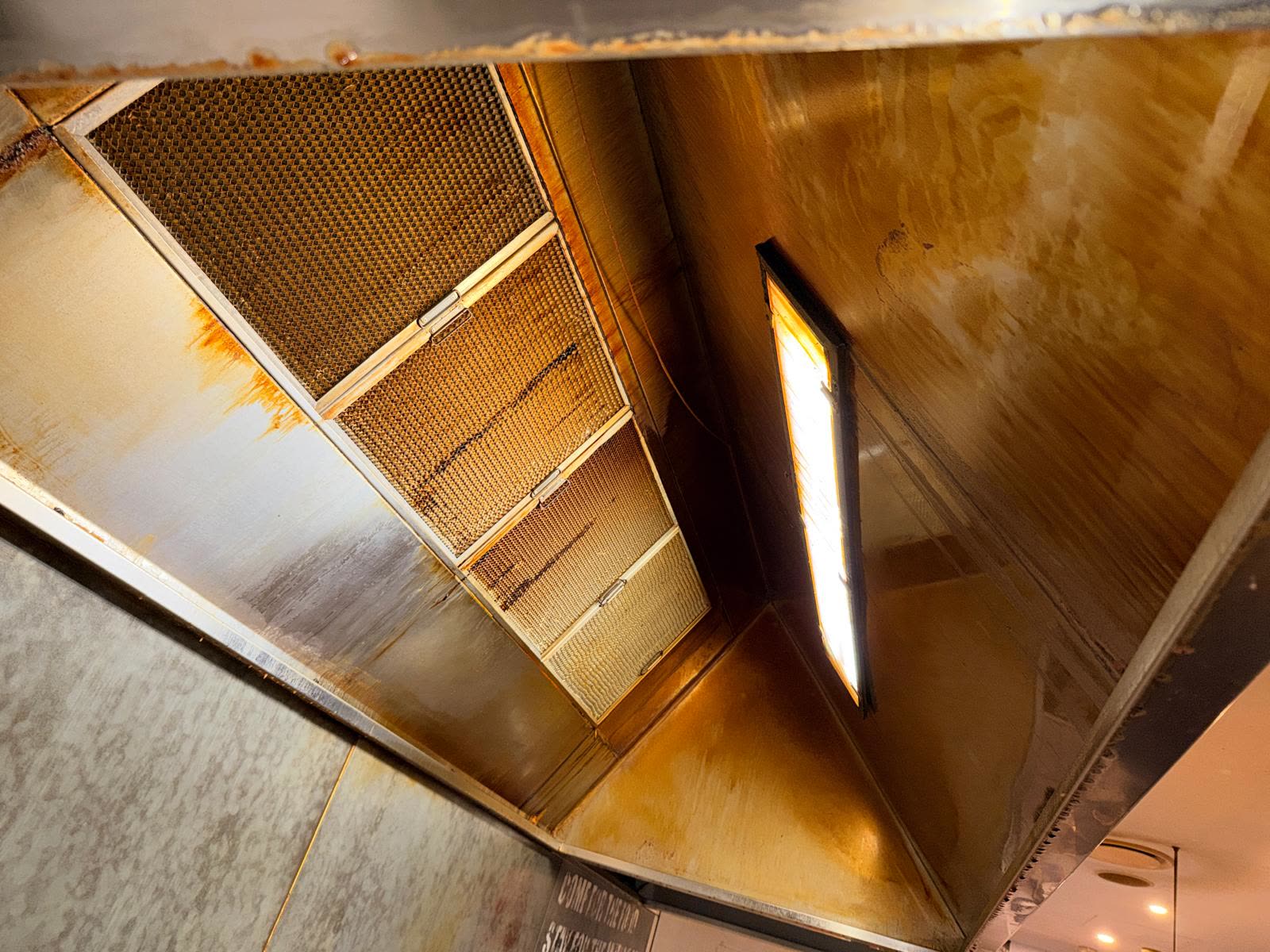
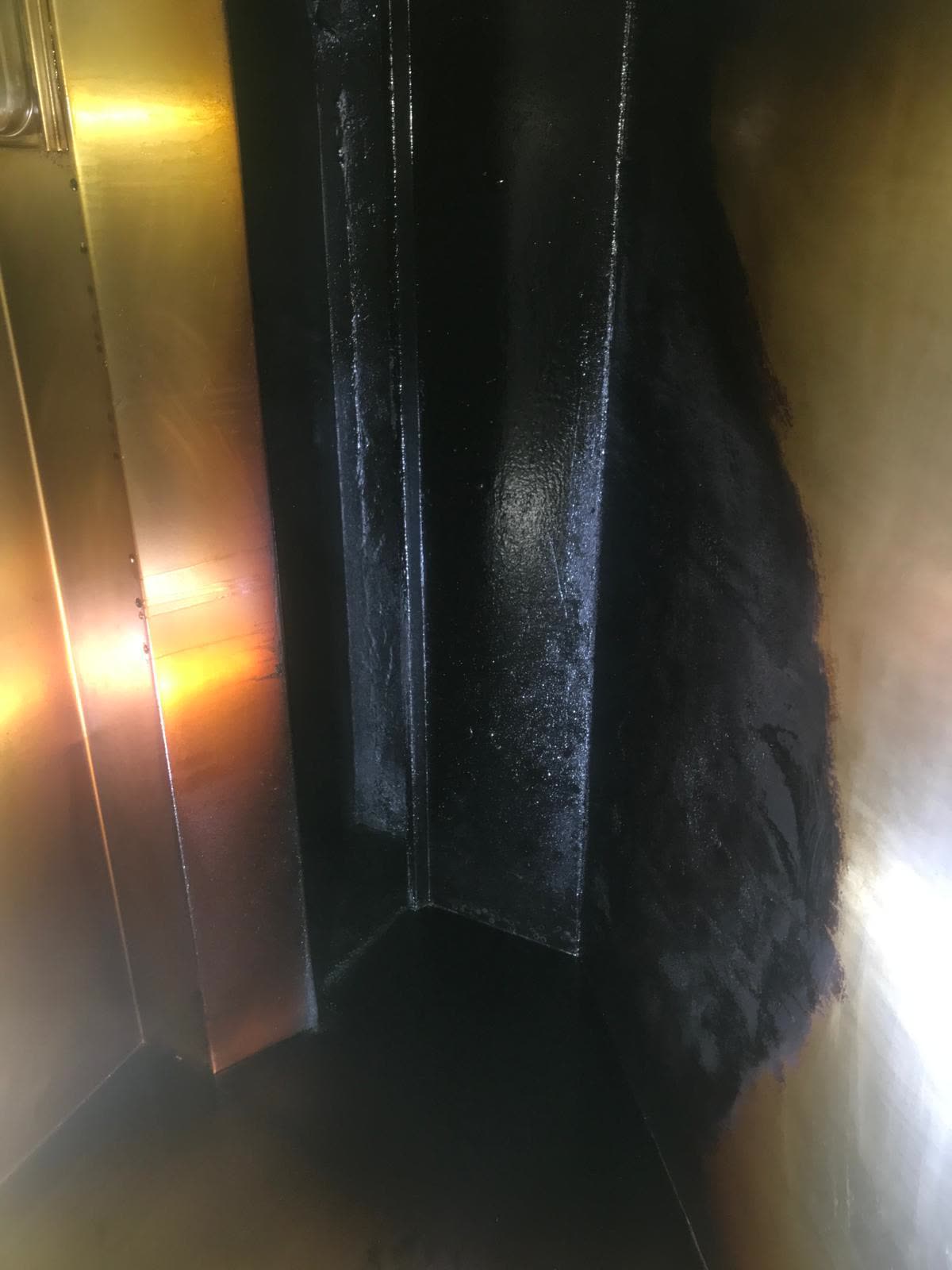
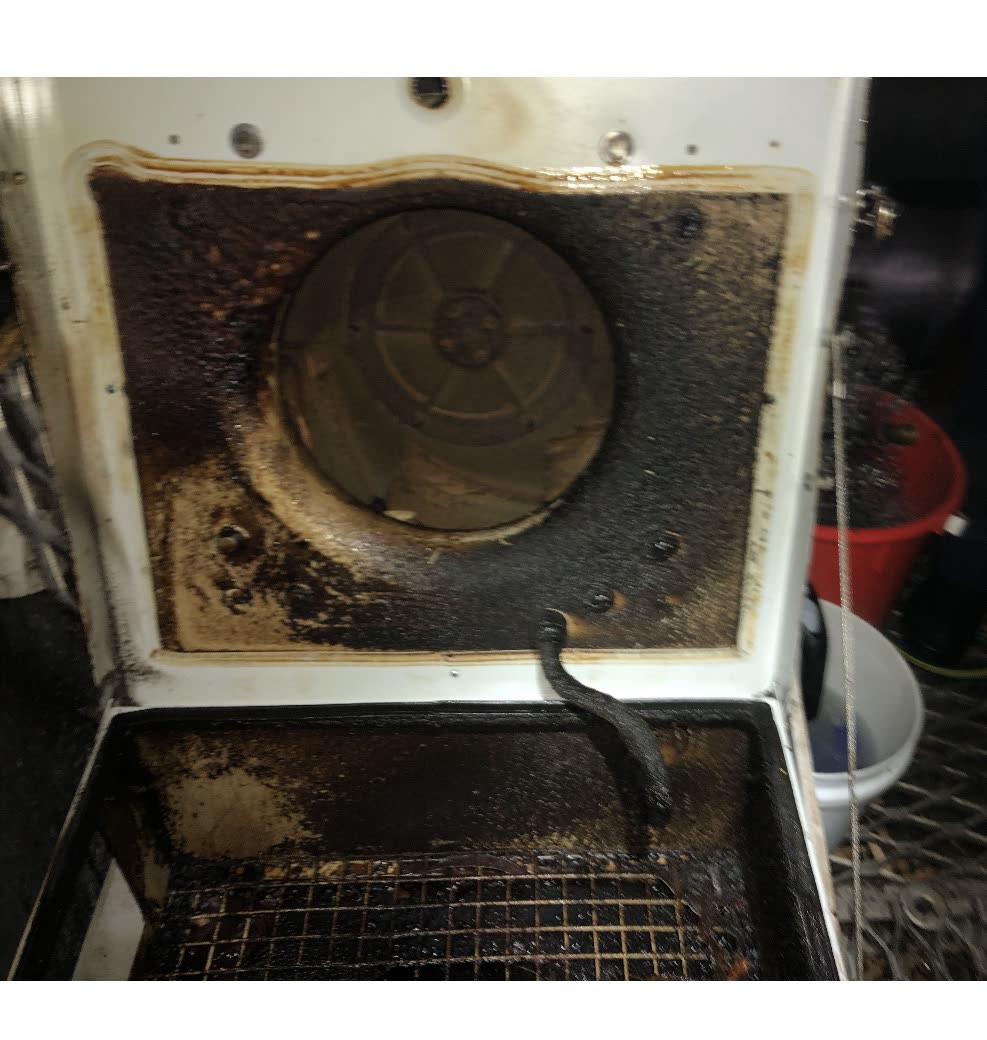
Grease accumulates across the full exhaust system, often well beyond what is visible from the kitchen floor.
A few things are specific to multi-site QSR groups:
- Head-office visibility. Property and operations teams need a portfolio view (done, due and overdue), not a shoebox of certificates per franchisee.
- Franchise audits and brand-standard reviews. A consistent evidence format across every store makes audits faster and findings easier to close out.
- Landlord and tenant obligations. In food courts and shopping centres, exhaust often connects to a central system the centre controls, and your lease may set obligations on what you maintain and document. Confirm where the boundary sits per site.
- Per-site insurance and the annual fire safety statement. Each building is assessed on its own, so the records sit at site level and the program has to produce them reliably at site level.
- Trading-hours scheduling. Most QSR kitchens are cleaned overnight or outside trading hours, so the provider must be genuinely set up for after-hours, weekend and public-holiday work across a national footprint.
A note on multi-site truth. The annual fire safety statement (the AFSS in NSW, and the equivalent essential safety measures regime in Victoria) is assessed per building. So one weak store generally does not sink the statutory fire safety statement for your whole network in one stroke. The bigger cost of a weak link is usually lost visibility and an inconsistent evidence trail, exactly the things that make a portfolio hard to defend when someone asks for the records.
The exposure is still real at the level of a single site, and that is usually where it bites. An insurer assessing a claim looks at that building’s records. A shopping-centre manager can chase the annual fire safety statement on one leased tenancy. A franchisor audit can flag one store. The weak link is rarely your whole network at once, but it is often one site, the one without the paperwork, on the day someone asks for it.
The Compliance Facts Underneath It
These support the operational case rather than replacing it.
The fire risk is real and well documented
- The most common fires involve unattended cooking, overheating of cooking oil or fat, and the ignition of fatty residues within range hoods and ducting. Source: Fire and Rescue NSW, Restaurant Fire Safety
- Duct fires can be intense and reach temperatures of 1,000°C within minutes, hot enough to ignite nearby combustible materials outside the duct via radiant heat transmission. Source: AIRAH Best Practice Guideline, Commercial Kitchen Exhaust Management (2022)
- According to Chubb, citing the NFPA, cooking equipment causes approximately 61% of restaurant fires, and fires can spread rapidly once grease has accumulated inside exhaust hoods and ducts. Source: Chubb Australia, Commercial Kitchens Fire Protection
Where the standard sits
AS 1851-2012 (Routine service of fire protection systems and equipment) is the Australian Standard commonly referenced for maintenance and documentation of fire protection systems, kitchen exhaust included. Records aligned with it help demonstrate a proactive maintenance approach, though requirements vary by site and system. Under AS 1851, responsibility for maintaining fire protection systems generally sits with the building owner or occupier, even where the work is outsourced. That includes keeping maintenance frequencies appropriate to the level of risk: baseline frequencies are not intended to be fixed indefinitely and should be reviewed against actual usage.
In New South Wales, recent changes under the Environmental Planning and Assessment (Development Certification and Fire Safety) Regulation 2021 are bringing AS 1851-2012 maintenance into scope for a range of building classes (commonly class 1b and class 2 to 9, which typically includes QSR premises). How and when this applies to your specific sites is best confirmed with your fire safety practitioner. The records feed each building’s Annual Fire Safety Statement (AFSS), which the building owner lodges. In Victoria, the equivalent obligation sits under the essential safety measures (ESM) regime. On the recent reforms and the “competent person” requirement for inspection and maintenance: in our reading these raise the bar on who should be doing this work and how it is documented, but how they apply to your specific sites is best confirmed with your fire safety practitioner.
Cleaning is part of compliance, not the whole of it
Exhaust cleaning is a cleaning activity. It does not replace the inspection, servicing or certification of fire protection systems, such as fire detection and alarm, suppression (sprinklers or kitchen suppression) and control equipment.
Those must be inspected and maintained by a competent person (and, where required, appropriately licensed) in accordance with AS 1851 and relevant regulatory requirements. Cleaning may support the performance of those systems, but it is not a substitute for their inspection or maintenance. SAIS Hygiene carries out the AS 1851-2012 maintenance and supplies the supporting records; it does not issue the statutory fire safety statement or certificate for your building.
Insurance
Many commercial property insurance policies include conditions about maintaining kitchen exhaust to the relevant Australian Standard, so it is worth checking your own policy wording, as terms vary. If a fire occurs, an insurer will often consider maintenance records when assessing a claim. A certificate that references AS 1851-2012 specifically tends to carry more weight here than a generic cleaning certificate, which may not satisfy a fire inspector or insurer.
What a Proper Clean Actually Covers
A kitchen exhaust system has five parts, and a proper clean addresses all of them:
- Canopy (hood) above the cooking line. Visible, but only a fraction of the system.
- Grease filters inside the canopy. They capture a percentage; the rest passes through to the ductwork.
- Ductwork in the ceiling or roof cavity. Enclosed, out of sight, and a major fire risk. This is where grease accumulates along every metre, bend and riser, and where fire can spread.
- Access panels along the ductwork. Without adequate panels, the duct cannot be properly cleaned or inspected.
- Exhaust fan on the roof. Frequently overlooked; grease on blades and housing cuts efficiency and adds fire risk.
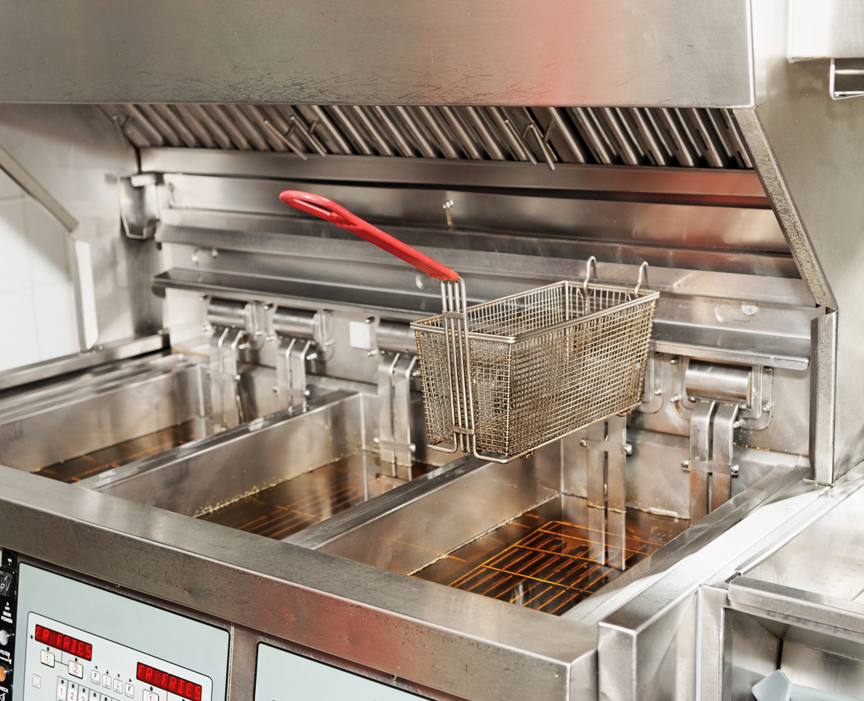
The step that separates a proper clean from an inadequate one is full-length ductwork cleaning: opening every access panel and removing grease and combustible residues to the extent reasonably practicable, across risers, horizontal runs, bends and junctions. Then the fan, then reassembly, then documentation. The output you should expect is a service report or certificate stating the date, the areas cleaned, the standard performed to (AS 1851-2012), any areas not accessible or needing attention, and before-and-after photographic evidence throughout, in a format that is easy to file, forward to an insurer, and produce during an audit.
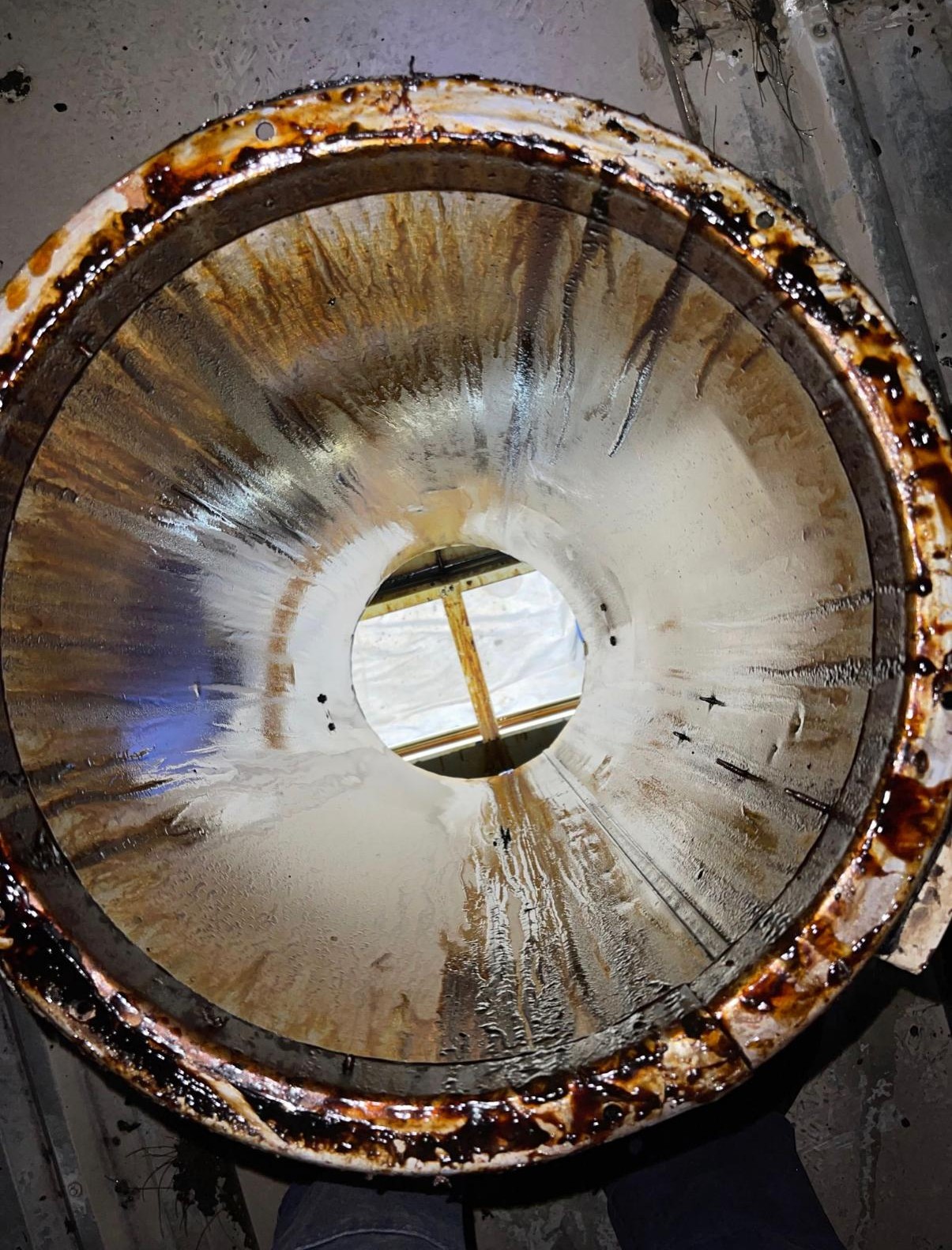
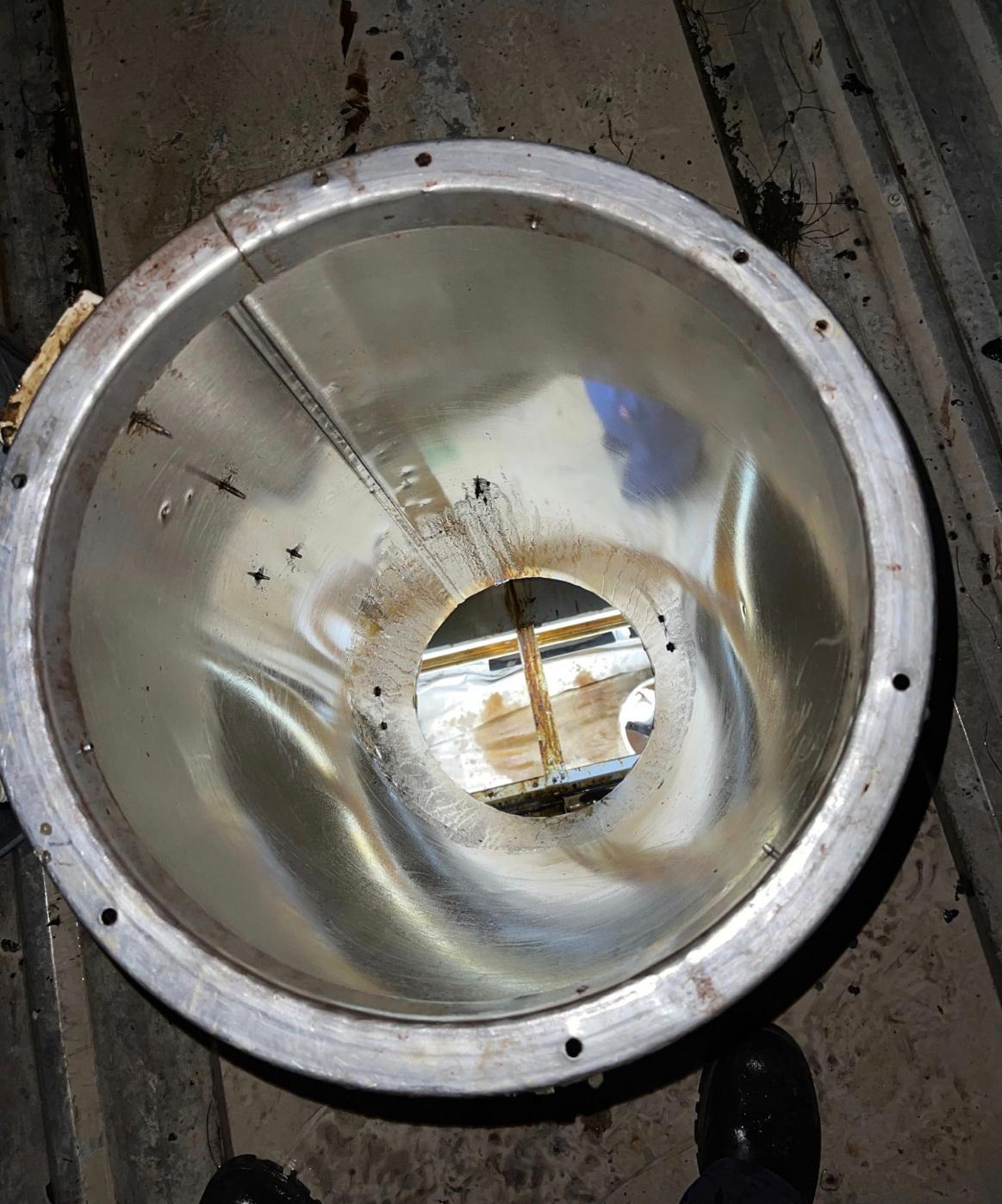
BeforeAfter
Cleaning Frequency (Illustrative Guidance)
Frequency is driven by the type and volume of cooking. The ranges below are general guidance only; a site-specific assessment is recommended, and frequency should be reviewed against actual usage rather than fixed indefinitely.
| Cooking profile | Examples | Typical frequency |
|---|---|---|
| Extreme | Charcoal chicken, flame grills, solid fuel | Fortnightly to monthly |
| Heavy | QSR / fast food, deep fryers, burger kitchens | Monthly to quarterly |
| High | Wok cooking, Asian kitchens, high turnover | Monthly to quarterly |
| Moderate | Standard restaurants, à la carte, bistros | Quarterly to 6-monthly |
| Light | Cafes, school canteens, aged care, light prep | Annually (minimum) |
Most QSR stores sit in the heavy band, and stores with charcoal or flame-grill lines move into the extreme band.
From the field
In high-use kitchens, grease can accumulate faster than expected, particularly where a site has scaled over time. It is not uncommon to see build-up in ductwork and fans that is not visible from the kitchen.
Where Multi-Site Groups Most Often Get Caught Out
When we take over a network from another provider, the same gaps recur:
- Canopy cleaned, ductwork not. The visible part gets done; the real fire risk behind it does not.
- Missing or inadequate access panels. Sealed over during renovations, or too small to remove debris. Ensuring the system is accessible is an owner/occupier responsibility; a good provider advises on inaccessible sections and can assist with remediation.
- No photographic documentation. If your current provider does not photograph the work, how do you verify it was done, at one store or three hundred?
- Certificates that do not reference the correct standard. A generic cleaning certificate that does not cite AS 1851-2012 may not satisfy a fire inspector or insurer.
- Schedules that do not match the operation. Frequency set years ago and never reviewed against how the store actually cooks today.
What Head Office Should Keep Doing
- Review cleaning frequency against actual kitchen usage, per site.
- Keep clear, consistent records of all cleaning and maintenance.
- Ensure the full system stays accessible and cleanable, including ductwork and fans.
- Confirm fire protection systems are inspected separately by qualified providers.
- Review insurer requirements periodically.
- Act promptly where grease build-up, reduced airflow or other issues are observed.
About SAIS Hygiene
SAIS Hygiene (S.A. Industrial Services NSW Pty Ltd) has provided specialist kitchen exhaust and HVAC cleaning to Australian commercial kitchens since 2003. We currently manage cleaning programs across more than 1,000 sites nationally.
- What we do: kitchen exhaust cleaning, HVAC duct cleaning, exhaust system remediation, HVAC build support, AC systems cleaning and commercial kitchen deep cleaning. We are specialists, not generalists; if a need falls outside that scope, we will tell you and point you to someone who can help.
- How we work: we clean and document to AS 1851-2012, with systems and processes aligned to AS 1851 and informed by associated standards (AS 1668.2, AS/NZS 3666.2). Every job comes with a detailed report, generally 30 or more before-and-after photos, so the records your fire safety statement and insurer rely on are there when you need them.
- Credentials: NADCA members since 2020, with ASCS-certified technicians; IKECA members; CM3 audited safety management. Work is performed by trained, NADCA/ASCS-certified technicians, directly managed, so the same training, methodology and accountability apply at every site, one standard across the network.
- One contact: a single accountable point of contact across your whole network, with consolidated reporting and transparent volume-based pricing.
- Reach: head office in Moorebank NSW, branch offices in Queensland and Victoria, service coverage across NSW, ACT, VIC, QLD, SA and TAS, with after-hours, weekend and public-holiday work available.
Trusted by McDonald’s, KFC, Domino’s and Betty’s Burgers franchisees, plus hundreds of franchisees across multiple brands and many of Australia’s leading hotel and hospitality groups. SAIS has serviced commercial kitchens for over 20 years.
Get a Free, No-Obligation Assessment
Whether it is one site or a national portfolio, here is what happens when you get in touch:
No pressure, even if the right next step is not with us.
Talk to us about your network
Tell us about your sites and we will come back with a tailored plan: recommended frequencies per site, full scope of work, and transparent volume-based pricing.
Disclaimer
This guide provides general information only and does not constitute compliance or fire safety advice. SAIS Hygiene carries out AS 1851-2012 maintenance and supplies the supporting records that a fire safety statement and insurer rely on; it does not issue the statutory fire safety statement or certificate for your building. Requirements vary by system, usage and applicable standards. Obtain site-specific advice where required.